Who Is a Lighting Designer?
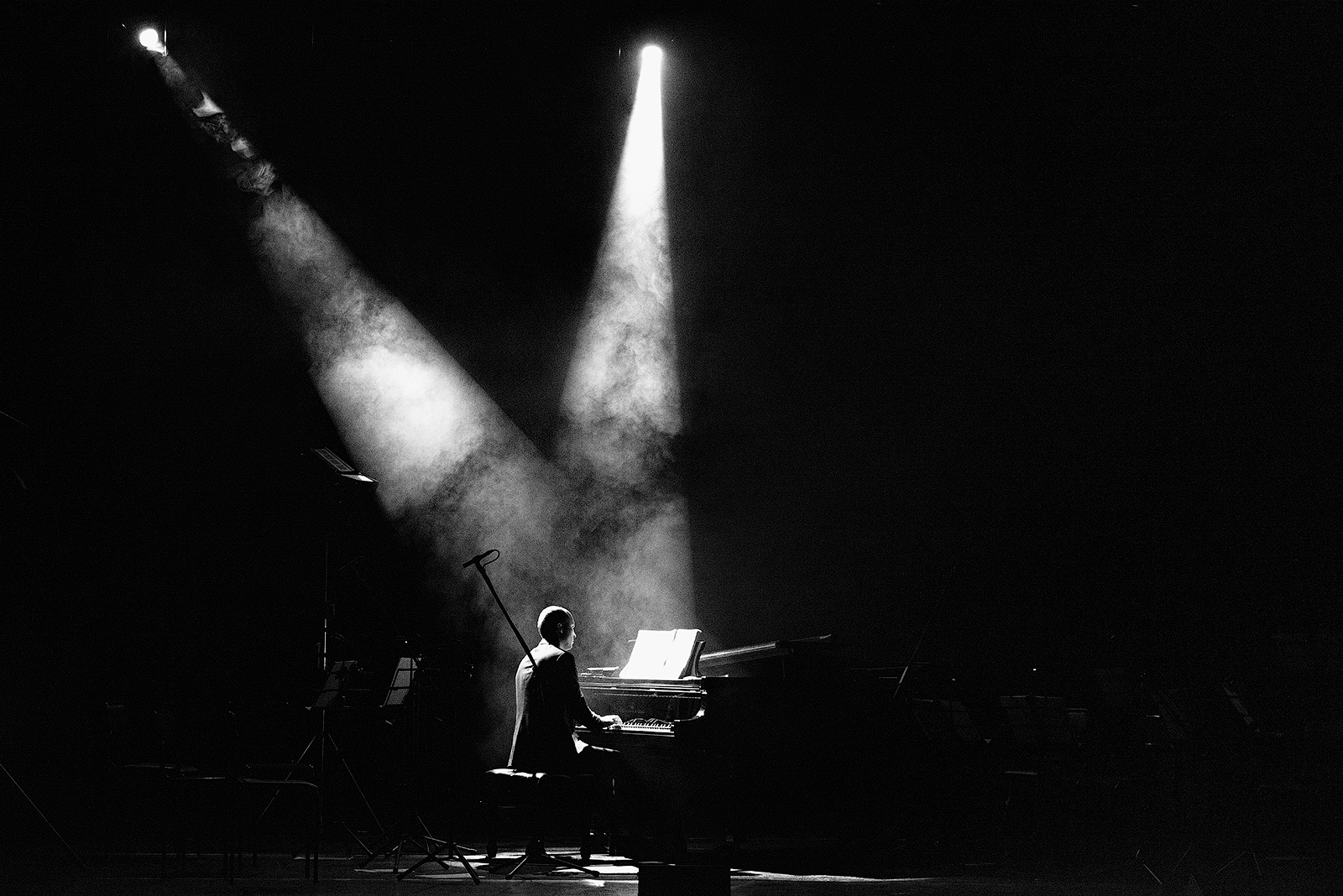
Definition of the Lighting Designer Profession —
A lighting designer is a professional who creates artistic lighting for theatre productions, concerts, exhibitions, shows, and other stage projects. They understand how light works on stage, how it affects audience perception, and how to use it to form the visual atmosphere of a piece. This profession combines artistic thinking, technical expertise, and in-depth knowledge of the lighting industry.
Role in a Production or Show
A lighting designer’s work starts long before performers appear on stage. At the artistic council, they discuss the concept with the director and scenographer: the light dramaturgy, mood, and character of the scenes. This is where the visual story is born, which the audience will «read» through lighting imagery.
Technical Part of a Lighting Designer’s Work
In addition to the artistic concept, the lighting designer is responsible for the technical implementation of the lighting. They determine which equipment is needed, what should be purchased, and what can be produced in-house by the theatre or venue.
This includes designing the control system, selecting the lighting console, creating fixture plots, developing technical drawings, and assisting in installation.
Difference Between Lighting Designer, Lighting Director, and Lighting Operator
These roles are often confused, but their responsibilities are different.
- Lighting Designer — the concept author. Creates the lighting idea, defines style, dynamics, the show’s score, and establishes artistic and technical parameters.
- Lighting Director — coordinator, helps implement the designer’s vision, runs rehearsals, monitors scene dramaturgy and execution quality.
- Lighting Operator — executor. Works on the console, follows plots created by the lighting designer, and runs the show. The operator does not change the concept; their task is precise reproduction.
What Does a Lighting Designer Do?
Project review and venue capabilities: every project starts with analyzing the event’s goals, technical possibilities, venue height, structural features, cable access, available equipment, and budget. The type of project—dramatic theatre, chamber concert, open-air, or festival show—defines artistic and technical approaches.
Preparing the Rider and Choosing Equipment
After agreeing on the concept, the lighting designer prepares a technical rider. It specifies the required equipment, quantities, types of fixtures, and electrical/network requirements. For custom, festival, or non-venue-specific projects, the rider becomes a full equipment map.
It is crucial for the lighting designer to know the technical specifications of all equipment—from profile theatre lights to impressive LED bars.
This also applies to effects such as choosing gobos, filters, and even knowing standard color codes from catalogs like Rosco.
3D Design and Lighting Visualization
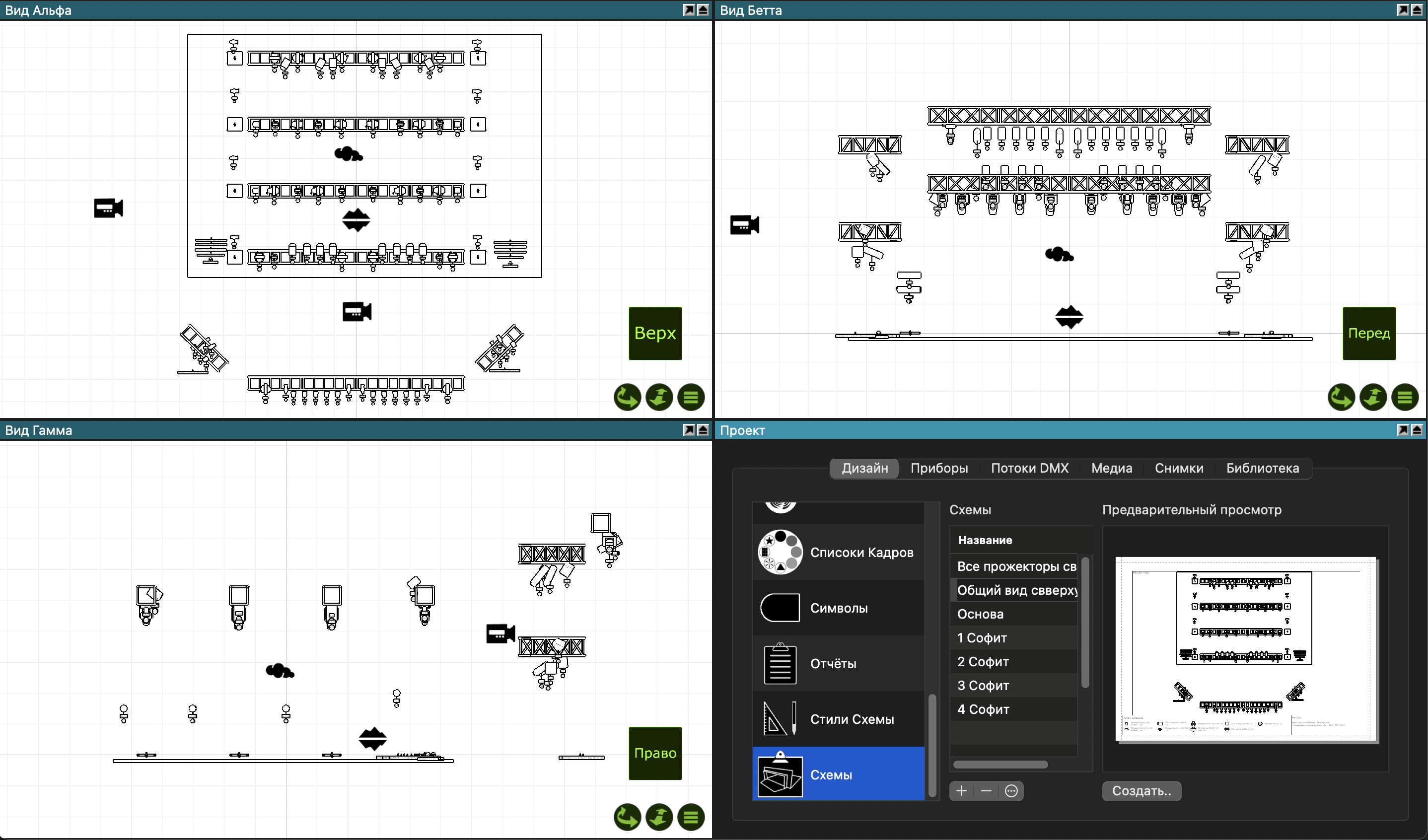
For large projects, a lighting designer uses professional visualization software—most commonly Capture.
3D modeling allows:
- to recreate the stage digitally;
- place fixtures and check coverage;
- calculate weight and load on trusses;
- prepare DMX patch;
- pre-program the base of the show.
In theatre, 3D modeling helps to see how light interacts with scenery and understand which fixtures, angles, and colors will achieve the desired effect.
Creating the Artistic Concept
The artistic image is defined by context: a chamber philharmonic evening, a musical, a modern play, or an open-air rock concert. The lighting designer’s task is to select the right types of fixtures, color palette, placement, and light dynamics.
Working with the Director and Scenographer
Lighting design is created together with the production team. The director sets the rhythm and narrative emphasis. The scenographer forms the visual architecture of the stage. The lighting designer transforms all of this into emotion, atmosphere, and visual language.
Programming Lights and Working with Consoles
Recording lighting into the console is a key stage. Consoles have their own syntax and logic. Common systems include ETC EOS, MA2/MA3, Avolites, and HOG.
It’s important for the lighting designer to master the syntax of each console.
Choosing the console depends on the project: MA2/MA3, HOG, Avolites are standard for concerts and live events. ETC EOS is the main tool for theatres, ideal for dramatic plays and musicals.
Deep Technical Knowledge
Lighting designers must understand complex technical processes:
- Time-code synchronization;
- Integration with 3D mapping and media servers;
- Network protocols (sACN, Art-Net, RDM);
- DMX patching and load distribution;
- Installation and equipment safety.
Documentation: From Patch to Focus Charts
After programming the show, the lighting designer prepares a set of documents:
- Stage plan;
- Patch;
- Wiring diagram;
- Fixture focus chart.
Running the Show — Final Stage
Lighting operates according to cues, music, time-code, or stage movements.
A guest lighting designer hands over all documentation to the local operator or electrician to ensure precise execution of the show.
Lighting Designer Salary and Why Their Work Matters
The salary of a lighting designer depends heavily on project type, workplace, and experience.
Theatre. In regional theatres in the CIS, a lighting designer earns roughly $400–$1,000 per month, depending on city and theatre budget.
Concerts and events. In touring and festival work, income ranges from $1,000 to $10,000 per project, depending on scale, location, number of stages, and equipment.
International projects. Experienced LDs on major concerts or festivals can earn $60,000–$120,000 per year.
From the Author:
I have been working as a lighting designer for over 10 years and know how underappreciated this profession sometimes seems.
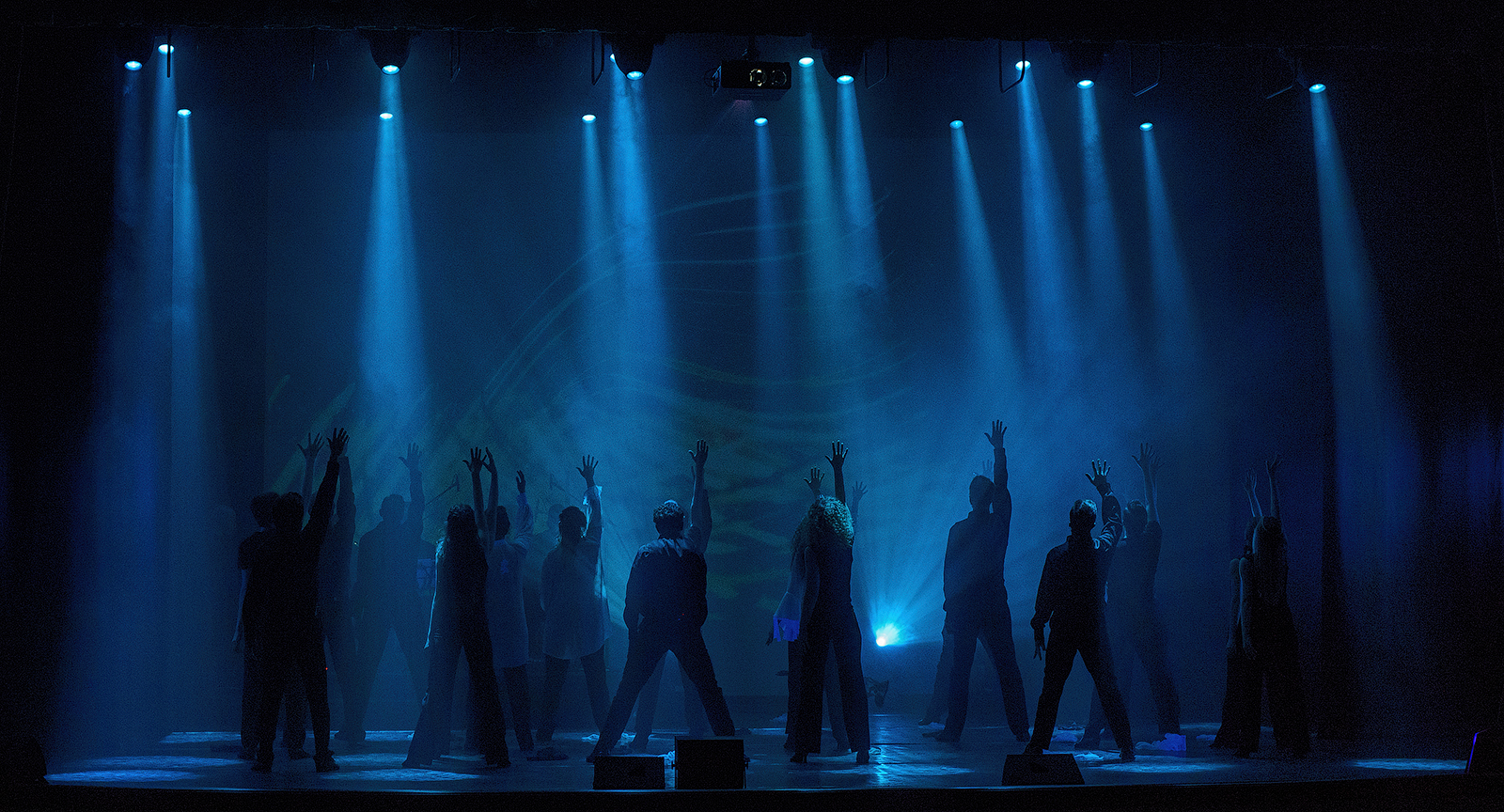
In reality, lighting shapes the mood of the scene, emphasizes dramaturgy, and helps the audience experience emotions with the performers.
Light is not just a technical background. In modern theatre, shows, or concerts, it is as important as actors, scenery, and music.
Well-designed lighting highlights drama and emotion, directs audience attention, and sets the scene’s atmosphere. Every lighting element becomes a participant in the production, making the project brighter and more memorable.
I have seen how properly designed lighting transforms an ordinary production into a living visual story. I hope this article helped you understand why a lighting designer’s work is essential and how their fees are formed.
If you have questions about lighting projects, equipment, or programming — I am always open for dialogue.
Comments are closed.